
About Us
- Home
- About Us
Problem Statement
In many rural communities in Cameroon, children attend school without reliable access to safe drinking water or basic sanitation.
In some areas, up to 69% of schools do not have a dependable water source.
As a result, students are frequently forced to leave class during school hours to fetch water. This reduces learning time, disrupts lessons, and affects overall school performance.
Girls are disproportionately affected. They often carry additional water and household responsibilities, leading to reduced attendance and inconsistent participation in school.
In rural and underserved regions, these challenges are intensified by weak infrastructure, long distances to water sources, and limited investment in school WASH systems.
The impact extends beyond education. Unsafe or distant water access exposes girls to safety risks, while inadequate sanitation limits dignity and attendance, especially during menstruation.
When schools lack safe water, education becomes fragmented, and girls experience the greatest loss in learning continuity.
Our Solution
Hope Spring For All Nations exists to remove one of the most overlooked barriers to education: lack of safe water and sanitation in schools.
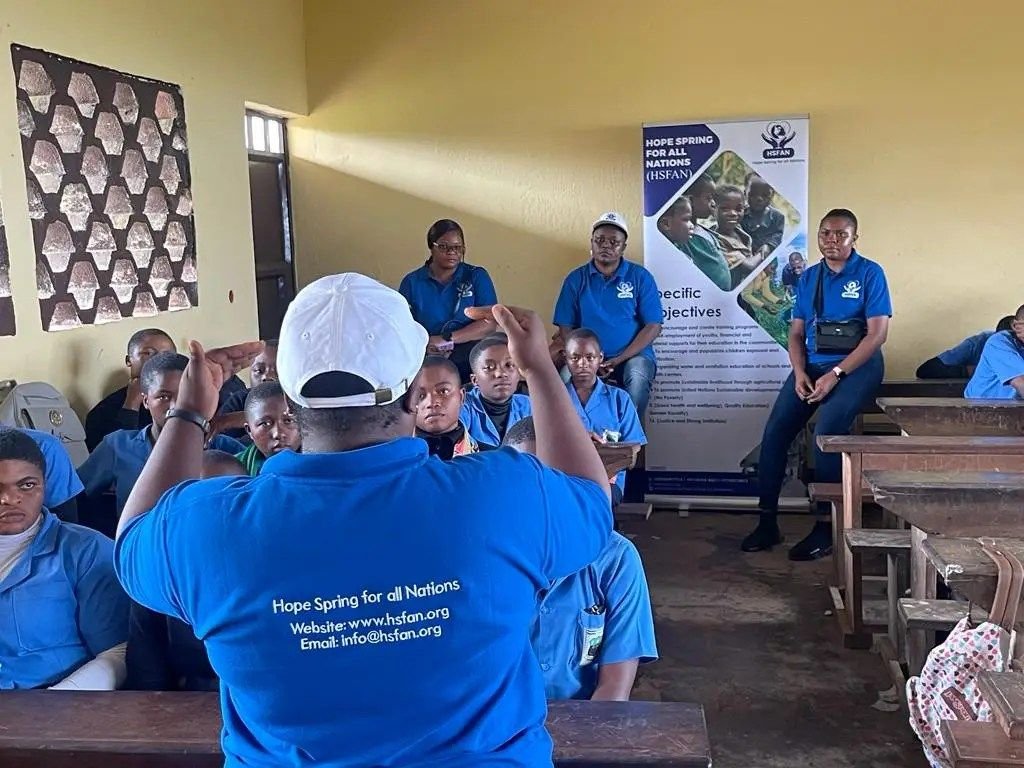
In many underserved communities, children attend school without reliable access to water or proper sanitation. This quietly reduces learning time, increases absenteeism, and disproportionately affects girls. We work directly in these schools to change that.
Our model is school-based, practical, and long-term. We do not provide short-term relief, we build systems that keep schools functioning every day.
We strengthen education continuity through three core actions:
Safe Water Access
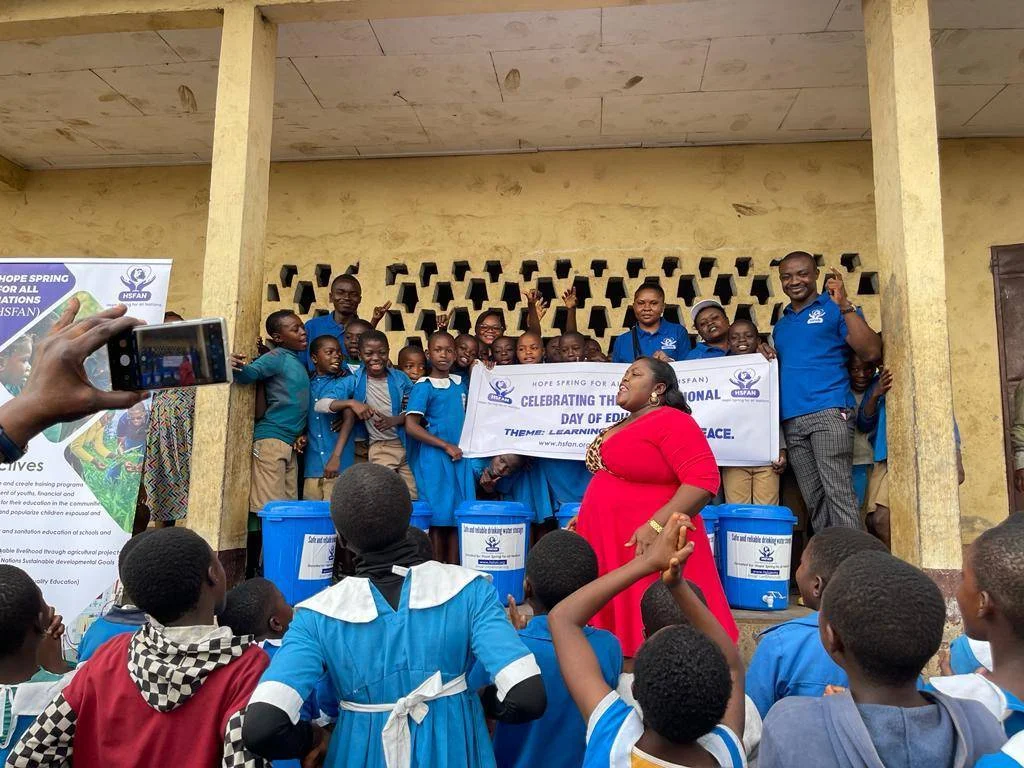
We install and rehabilitate water systems such as boreholes and hand pumps within or near schools, ensuring children have safe water without leaving the classroom environment.
Hygiene & Sanitation Support
We improve sanitation conditions and promote hygiene practices that protect health, dignity, and consistent school attendance, especially for girls.
Problems and their Solutions
- Weak School WASH Infrastructure
- Rural and Fragile-Context Inequality
- Gendered Burden Falls on Girls
- Conflict and Displacement Disrupt Access
- Water Collection Exposes Girls to Protection Risks
Problem 01: Weak School WASH Infrastructure
The first root cause is the lack of functioning water systems in schools. In Cameroon, only about half of schools have access to clean water, and a 2025 assessment in the Northwest and Southwest found that 69% of schools lacked a reliable and affordable drinking water source. A peer-reviewed study also found that one-third of schools did not meet basic WASH standards, with the majority being public schools.
Sources: UNICEF, peer-reviewed studies
Solution:
We install or improve water systems in schools so children have safe water during the day. Girls no longer have to leave school to search for water. (UNICEF – school WASH solutions)
Problem 02: Rural and Fragile-Context Inequality
The problem is more severe in rural and crisis-affected areas. UNICEF highlights major urban–rural disparities in Cameroon, with significantly lower access to safe water in rural communities. Globally, World Health Organization / WHO/UNICEF Joint Monitoring Programme report that access to safely managed drinking water is 38 percentage points lower in fragile contexts, such as conflict-affected regions of Southwest Cameroon.
Solution: Strengthen Safe Water Use at Home
We train families and students to treat and safely store water at home, reducing illness and extending safe water beyond the school. (WHO; UNICEF)
Problem 03: Gendered Burden Falls on Girls
When water is not available on-site, girls are often responsible for collecting it. UNICEF data show that in households without water on premises, women and girls are responsible in 7 out of 10 cases, with girls more likely than boys to spend time fetching water. This reinforces inequality and directly affects girls’ education.
Source: UNICEF
Solution: Promote Hygiene and Safe School Environments
We support simple hygiene practices, such as handwashing and safe sanitation, to make schools healthier and safer for girls. (UNICEF; UNESCO)
Problem 04: Conflict and Displacement Disrupt Access
In Northwest and Southwest Cameroon, conflict has damaged infrastructure and weakened maintenance systems. UNICEF reports that many children now rely on unsafe water sources, often walking long distances to rivers and streams. In some communities, children are missing school due to the time spent fetching water.
Solution: Sustain Functioning Water Systems
We work with school leaders, parents, and communities to maintain water systems long after installation. (WHO/UNICEF GLAAS).
Problem 05: Water Collection Exposes Girls to Protection Risks
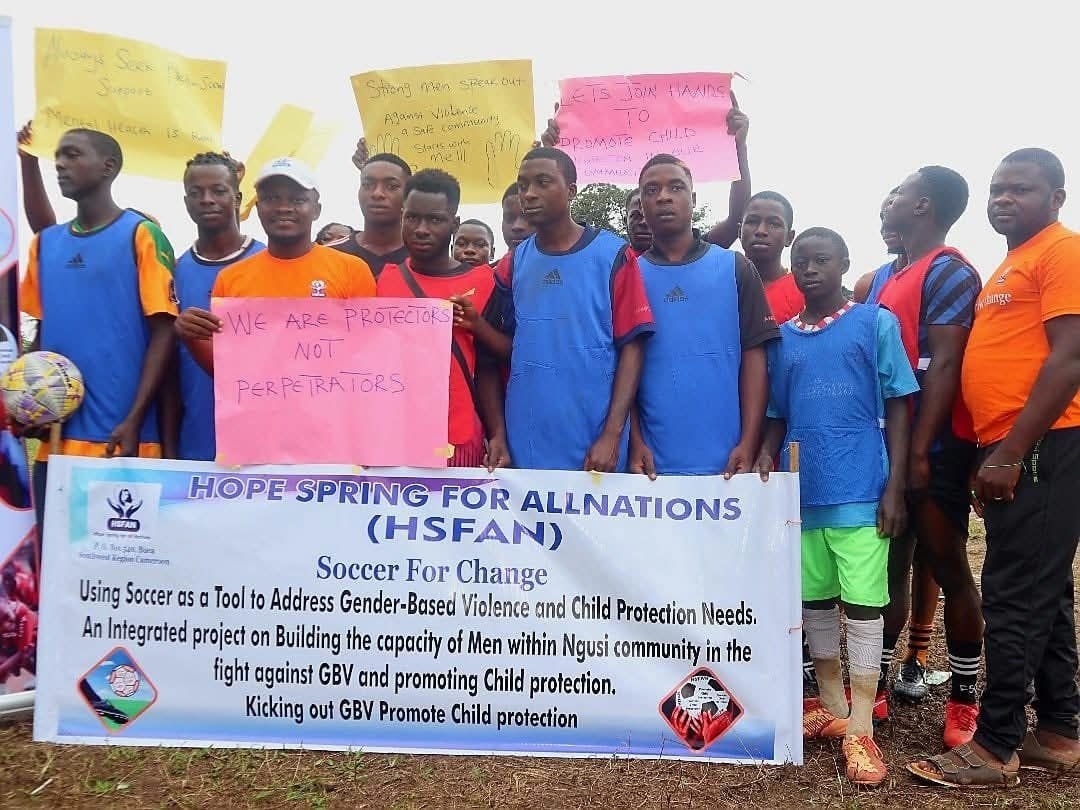
This is not only a water issue—it is a protection issue. Long journeys to fetch water expose girls to harassment, violence, and abuse. UNICEF reports that water collection increases the risk of gender-based violence, a finding supported by studies in Cameroon that highlight multiple layers of risk for girls.
Solution: Build Community Ownership and Accountability
We engage families and local leaders from the start, ensuring systems are protected, managed, and sustained over time.
What Drives Our Work
In many communities, schools lack access to reliable water sources. For girls, this often means leaving class to search for water, which not only cuts into their learning time but also puts them in unsafe situations.
Some of the schools we collaborate with haven’t had a dependable water source since they opened. This issue goes beyond just water access; it touches on safety, dignity, health, and ultimately, the ability of girls to stay in school.
Our Active Programs
Where We Are Making Impact

GBV Survivor Empowerment
We empower survivors of gender-based violence from Ekona Mbenge by sponsoring vocational and computer skills training in partnership with the Women Empowerment Center, supporting recovery, dignity, and economic independence.

Education & Sanitation Support
We provide school benches and toilets to underserved schools in NSuke and Mbabe, Tombel Subdivision, improving learning conditions, safety, and hygiene for children.

Child-Friendly Space
We run a Child-Friendly Space in Ngusi where children learn, play, and grow in a safe, supportive environment that promotes wellbeing and early development.
Do you want to join us?
Membership program
Be Part of the Change
Your membership empowers education, health, protection, and clean‑water initiatives that create lasting impact.
Grow With Your Community
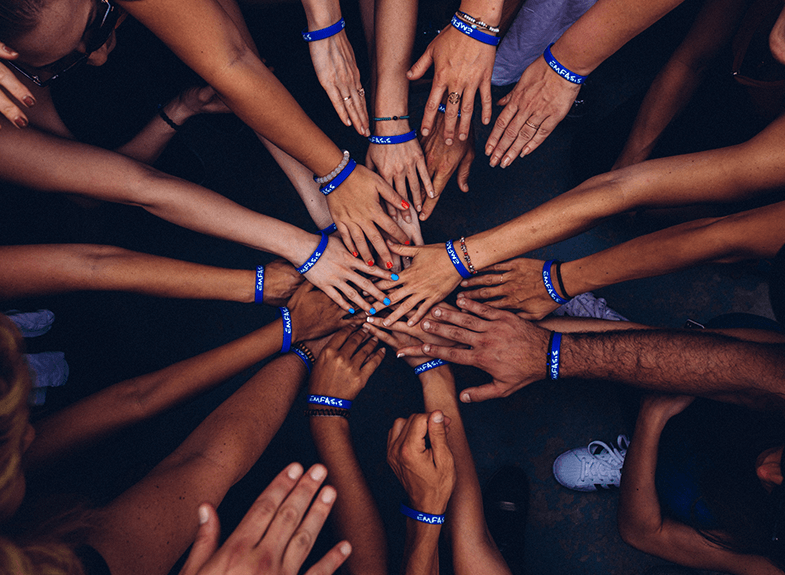
Together, we build stronger, resilient communities through partnership, learning, and shared commitment.
Types of Membership
1 - For individuals who want to contribute and stand with our mission through small, regular support.
2 - For people who wish to engage more actively by participating in campaigns, trainings, and community activities.
3 - For organizations, groups, or individuals who want to collaborate, support projects, or provide technical and financial assistance.